In years lots of people have started making their own home media servers.
These servers help store, organize and stream movies, TV shows, music and photos.
You can use them across devices at home and even access them remotely over the internet.
Many people are moving away from using streaming services that charge every month.
These services can remove content at any time. Require you to pay each month.
A home media server lets you create your private streaming library.
You have control over it and you can store your favorite content permanently.
You can organize your content however you like.
Then you can stream it to TVs, laptops, tablets and smartphones.
You do not have to worry about internet speed or content availability.
A home media server also gives you video quality.
You do not see ads. You have complete privacy compared to online streaming platforms.
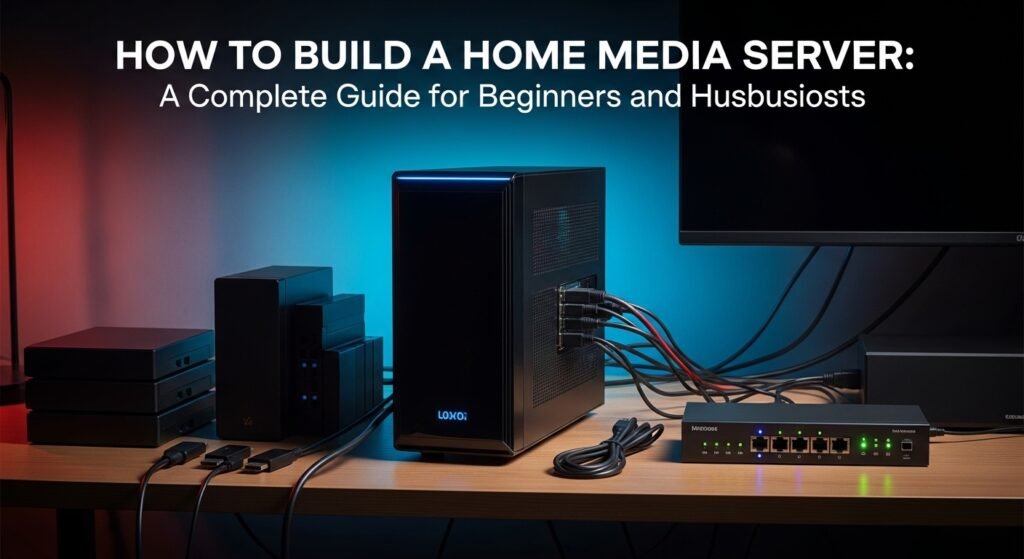
This guide will show you how to build a home media server from start to finish.
It covers choosing the hardware to installing the necessary software and setting up storage.
Hardware Options
* You can use a desktop computer.
* A mini PC is another option.
* You can also use a NAS (Network Attached Storage) device.
You can use hard drives, external drives and RAID configurations for data protection.
Software and Configuration
The guide will introduce media server software.
It will explain how to organize your media library
You will learn how to enable access.
This way you can stream your media from anywhere.
For All Users
Whether you are a beginner using hardware at home or an advanced user building a powerful dedicated server
This guide will help you understand the entire process step by step.
You will be able to build a home media server.
What Is a Home Media Server?
A home media server is a computer or a special device. It stores all your media files. These files include movies, TV shows, music and photos. The server sends these files to devices in your home. It also sends them over the internet.
You can listen to these files on devices. These devices include TVs, smartphones, tablets, laptops and gaming consoles.
This is really useful. You do not have to copy files to each device. Copying files to each device would waste space. It would also be hard to manage. The media server keeps everything in one place. It sends the files when you want them. This makes it easy to keep your media files organized and updated.
For example if you add a movie to the server you can watch it on any device away. You do not have to copy the movie to each device. Many people can also watch things at the time.
A home media server helps you keep your media files looking nice and tidy. You do not have to look through folders and file names. The software on the server organizes your files into categories. These categories include Movies, TV Shows, Music and Photos. The software gets pictures and information about the movies and TV shows from the internet. This makes your media collection look like a service like Netflix.
There are programs you can use to run your media server. Some popular ones are Plex Media Server, Jellyfin and Emby. These programs run on your server. They let you connect to it with apps or web browsers. They organize your files, get pictures and information and make your media collection look nice. Some programs even let you watch your media files over the internet. They let you make user accounts and control what your kids can watch.
Overall a home media server is a way to keep control of your media files. It helps you keep them organized. It lets you watch them anywhere. This is an alternative to using streaming services all the time. You can use your media server to watch your movies, TV shows, music and photos whenever you want.
Benefits of Building a Home Media Server
A home media server is a thing to have. It is becoming very popular among people who want to be in charge of their media and entertainment. One of the things about a home media server is that you can make your own streaming platform. You do not have to use lots of streaming services. You can keep all your movies, TV shows, music and photos in one place. Watch them on any device in your home. For example you can start watching a movie on your TV then watch it on your tablet and even finish it on your phone in another room. Everything is in one place. It is easy to get to.
Another good thing about a home media server is that it organizes your media for you. The software can look at all your media files. Put them into groups like Movies, TV Shows, Music and Photos. It can even get information from the internet like movie posters and actor names. This means you do not have to rename all your files by hand. Your media collection will look neat and nice like a streaming service. This makes it easy to find and watch what you want.
A home media server also lets you get to your media from anywhere. If you set up your network right you can watch your movies and TV shows over the internet when you are not at home. This is like having your private cloud for your media. You do not have to keep video files on your phone or laptop. You can just connect to your home media server. Watch what you want. This is great for people who travel a lot or want to watch their media from anywhere in the world.
Finally after you buy the hardware and set it up you do not have to pay a fee to use your home media server. This is a money saver in the long run. Streaming services cost money every month. That can add up over time. With a home media server you pay for the hardware and storage once and then you can use it for years. Over time this can save you a lot of money. You get to be in charge of your own media, which is a home media server. You also get privacy and you do not have to worry about streaming platforms taking away the things you want to watch which is a big advantage of a home media server.
Home Media Server Hardware Requirements
Before you build a home media server you need to know what kind of equipment you will need. You also need to understand how each part affects how well your home media server works. The good thing is that you do not have to buy a lot of equipment to get started with a home media server.
A lot of people build home media servers using computers or small computers. The equipment you choose depends on how many people will be watching videos at the time on your home media server. It also depends on if you will be watching high-quality videos like 4K on your home media server and how much space you need to store your movies and music on your home media server.
Basic Hardware Requirements for a Home Media Server
A home media server does not need to be very powerful. If you just want to watch videos on one or two devices a simple system is enough for a home media server. A basic home media server should have a processor like an Intel i3. It can also have an Intel i5 or something similar from AMD. The processor is important for a home media server because sometimes your home media server needs to change the video format so it can play on devices. Changing video formats uses a lot of power on a home media server. So a better processor makes your home media server work better.
Your home media server should also have at least 8GB of RAM. RAM helps your home media server work smoothly. It runs the operating system and home media server software on your home media server. Some home media servers can work with 4GB of RAM. 8GB is better for performance on a home media server. It is also better for adding things to your home media server.
You will also need a drive to store your movies, TV shows, music and photos on your home media server. Most people start with a drive like 4TB or 8TB. You can add later to your home media server. Regular hard drives are usually better for storing media on a home media server. They are cheaper than SSDs.
It is also an idea to use a wired Ethernet connection instead of Wi-Fi for your home media server. Ethernet is faster and more stable. This is important for watching high-quality videos without interruptions on your home media server. A Gigabit Ethernet connection is best for streaming to devices from your home media server.
You can also use an SSD for the operating system on your home media server. This makes your home media server start up faster and work smoothly. Then you can use the drives for storing media on your home media server.
This basic setup is good enough for watching movies and TV shows on devices at the time on your home media server. This is especially true if the videos are already in a format that can be played on a home media server.
Recommended Hardware for Advanced Home Media Servers
If you want a home media server that can do more you will need hardware. This is especially important if you want to watch high-quality videos like 1080p or 4K on your home media server. You may also want to stream to devices at the time on your home media server.
A good processor like an Intel i5 or Intel i7 is recommended for home media servers. These processors can handle video formats efficiently on a home media server. This means playback and performance for your home media server.
You should also have RAM, like 16GB on your home media server. More RAM means your home media server can store data, run applications and work better overall.
An SSD is also an idea for advanced home media servers. It makes your home media server more responsive and faster.
Some people also use drives. Combine them using RAID or NAS on their home media server. This can help keep your data safe if one hard drive fails on your home media server.
A Gigabit Ethernet network is also important for home media servers. It can handle high-bitrate video. Provide smooth playback on a home media server.
This advanced setup is best if you want to watch high-quality videos on your home media server. You may also want to run media services, store a lot of media or stream to devices at the same time, on your home media server. Your home media server will be able to handle it. A home media server is a way to store and play your media.
Using an Old PC as a Media Server
Building a home media server is really easy. Does not have to cost a lot of money. You can use a desktop computer that you already own. Many old computers are still powerful enough to handle media streaming tasks. This is especially true if you’re only streaming to a few devices at the same time.
By letting an old computer sit unused you can turn it into a dedicated media server. This media server runs all the time. Stores your entire media library. People like this approach because it does not require a lot of money to get started. It is also relatively easy to set up.
The process of turning a computer into a home media server is simple. You can do it step by step. The first step is to install an operating system on the computer. You can use Windows or Linux. Windows is generally easier for people who are just starting out. This is because it has an interface and a lot of software support. Linux is preferred by users. This is because it is free and stable. It also uses system resources. Popular Linux distributions for servers include Ubuntu Server, Debian and OpenMediaVault.
The next step is to install media server software. You can use software such as Plex Media Server, Jellyfin or Emby. This software turns your computer into a streaming server. It organizes your media. Download posters and descriptions. It also allows other devices like TVs and phones to connect and stream content.
After installing the media server software you need to add drives for media storage. You can install internal hard drives inside the desktop computer. You can also connect USB hard drives. Most media files require a lot of storage space. So many users install drives. These drives can be 4TB, 8TB or larger. Over time you can add drives as your media collection grows.
Once the storage is ready you should organize your media into folders. For example you might create folders such as Movies, TV Shows, Music and Photos. Inside the TV Shows folder you would typically create a folder for each show. You would also create folders for each season. It is really important to organize your media. Media server software uses folder names to identify and organize your content correctly.
After organizing your media folders you add these folders to your media server software. The software will scan the folders. Identify the media files. It will also download metadata such as posters and descriptions. Then it will build your media library automatically. This process may take some time. It depends on how many files you have.
Once everything is set up you can start streaming to your devices. Most media server platforms have apps for smart TVs, smartphones, tablets, web browsers and streaming devices. You simply install the app. Log into your media server. Then your entire media library will be available to stream.
This approach is often referred to as a DIY home media server. It is a common method for beginners. This is because it is low-cost, flexible and easy to upgrade. As your needs grow you can add storage, upgrade the processor, increase RAM or even move to a dedicated server or NAS system. You can do all of this while keeping the media server software and media library. You can use the media server, such as Plex Media Server and the same media library.
Choosing the Best Operating System
The operating system you choose will depend on your experience level and the type of server you want to build.
Common operating systems for home media servers include:
- Windows
- Ubuntu Server
- TrueNAS
- Unraid
- OpenMediaVault
Windows is the easiest option for beginners because installation and software setup are straightforward.
Linux-based systems such as Ubuntu are more flexible and efficient but require more technical knowledge.
TrueNAS and Unraid are designed specifically for NAS and media server environments.
Media Server Software Comparison
When you are building a home media server choosing the media server software is a big decision. This is because the software is what manages your media, organizes it and streams it to all of your devices. Good media server software will do things like organize your files, download posters and descriptions and give you an interface. It will also let you stream your media both at home and over the internet. There are three media server platforms: Plex Media Server, Jellyfin and Emby. Each one has its good points and is better for different types of users.
Plex Media Server is the popular one. It is easy to set up even if you have never used a server before. Plex Media Server looks at your media folders, organizes your movies and TV shows, downloads posters and descriptions and makes everything look nice and professional. It is like the streaming services you pay for. You can use it with your own media. Plex Media Server works with a lot of devices like TVs, phones and tablets. You can even use it to stream your media from anywhere in the world.. Some features, like hardware transcoding and offline downloads require you to pay for a subscription called Plex Pass. Without paying, Plex Media Server is still very good and works well for most people.
Jellyfin is an alternative to Plex Media Server. It does a lot of things like organizing your media and streaming it.. With Jellyfin you do not have to pay for anything. This makes it popular with people who like open-source software. Because Jellyfin is a source you can customize it and add new features.. It can be a little harder to set up than Plex Media Server. The interface is not as nice either. Still Jellyfin is a choice for people who want a free media server with no subscriptions.
Emby is another media server platform. It is similar to Plex Media Server in a lot of ways. It organizes your media downloads information about it and lets you stream it to devices. Emby also lets you access your media from anywhere. Like Plex Media Server, Emby has a version and a paid subscription. Some features, like hardware transcoding require the paid subscription. Emby is like a ground between Plex Media Server and Jellyfin. It is easy to use. Also lets you customize things.
So which one should you choose? If you are new to this Plex Media Server is usually the easiest. It is simple to install and works with every device. Advanced users often like Jellyfin because it is free and customizable. If you want something in between with an interface and customization options Emby might be the way to go. Really all three platforms can work well for a home media server. The best one, for you, depends on what you want: ease of use, free and open-source software or customization options. Plex Media Server, Jellyfin and Emby all have their strengths and you should choose the one that fits your needs.
How to Build a Home Media Server: Step-by-Step
Building a home media server is not that hard. You can break it down into steps. At first the idea of running a server at home may sound like a lot of work. It is actually pretty easy if you follow each step. Once everything is set up your home media server will run in the background. Take care of your media for you.
Step 1: Get Your Hardware Ready
First you need to get the hardware that will run your home media server. You can use a desktop computer, a mini PC, a laptop or a dedicated NAS device. This device will be the server that stores and streams all your media files.
You should put one or more storage drives in the system depending on how media you want to store. Movies and TV shows take up a lot of space. Many people install big hard drives like 4TB or 8TB. If you can put an SSD in for the operating system. Use HDDs for storing media.
It is really important to connect your home media server to your network using a wired Ethernet connection, not Wi-Fi. Ethernet is faster and more stable which helps prevent buffering when you are streaming high-quality video.
After you set up the hardware, put the server in a place where it can stay on and connected to the network all the time.
Step 2: Install the Operating System
Next you need to install the operating system on your home media server. You can use Windows, Linux or a NAS operating system like TrueNAS.
After you install the operating system make sure to update it. Install all updates, drivers and network configurations before you install any media server software. This makes sure your system is stable and works well.
You should also set up some things like:
* A static IP address
* Remote access, like SSH or Remote Desktop
* Shared folders for storing media
These things make it easier to manage your home media server
Step 3: Install Media Server Software
Once your operating system is ready you need to download and install your media server software, like Plex Media Server or Jellyfin.
After you install it the media server software will open a web page that you can get to from your browser. This is where you will set up your media libraries, users and streaming settings.
When you first set it up you will make an account name your home media server and choose some settings for your media libraries.
Step 4: Organize Your Media Files
Before you add your media to the server you need to organize your files. Media server software uses the folder structure and file names to figure out what your movies and TV shows are.
A common way to organize your files is like this:
* Movies
* TV Shows
* Music
* Photos
Inside the Movies folder each movie should be its file with the movie name and year. Inside the TV Shows folder you should make a folder for each show separate folders for each season and then put the episodes in the season folders.
If your files are not named right your home media server may not recognize them. May get the wrong information.
Step 5: Add Media Libraries
After you organize your media files, open your media server software. Add the folders as libraries. You will add the Movies folder as a Movies library and the TV Shows folder as a TV library. So on.
Once you add the folders the media server software will look at your files. Automatically get information like:
* Movie posters
* Episode titles
* Descriptions
* Cast information
* Subtitles
* Ratings
This may take some time depending on how media you have but once it is done your media will look nice and organized like a streaming service.
Step 6: Stream to Your Devices
The last step is to stream your media to your devices. You need to install the media server app on your TV, smartphone, tablet, laptop or streaming device. Most media server platforms have apps for devices and operating systems.
After you install the app, sign in to your home media server account. Connect to your server through the network. Once you are connected you can get to all your media from any device anywhere in your home network. If you set up remote access from anywhere in the world.
After you do all these steps your home media server will be. You will have your own private streaming platform at home. Your home media server will be like a streaming service. You will be in control of your media. You can watch your movies, TV shows, and listen to music. Look at photos, from any device at any time.
Storage Setup for a Home Media Server
Storage is one of the most important parts of a media server because media files require a large amount of space.
Most media servers use:
- SSD for the operating system
- HDD for media storage
Large hard drives such as 4TB, 8TB, or 12TB are commonly used for storing movies and TV shows.
Some users also use RAID configurations to protect their data in case a hard drive fails. RAID 1 and RAID 5 are common choices for home media servers.
Remote Access and Streaming Outside the Home
One of the most useful features of a home media server is remote access. This allows you to stream your media from anywhere in the world.
To enable remote access, you typically need to:
- Enable remote streaming in your server software
- Set up port forwarding on your router
- Use a static IP or dynamic DNS
- Log in to your server account from outside your network
Once configured, your home media server works like a private streaming service accessible from anywhere.
Estimated Cost of Building a Home Media Server
The cost of building a home media server varies depending on the hardware you choose.
A basic setup may include:
- Used desktop computer
- One or two large hard drives
- SSD for operating system
- Free media server software
A basic home media server can often be built for $200 to $400, while advanced NAS setups can cost significantly more.
Final Thoughts
Building a home media server is a practical and rewarding project that allows you to store, organize, and stream your media from a central location. Whether you use an old PC, a mini computer, or a dedicated NAS system, the overall setup process is similar.
A properly configured home media server can replace many streaming services, provide full control over your media library, and allow access to your content from anywhere. With the right hardware, software, and storage setup, you can build a reliable and efficient media server that will serve your household for many years.