Most people assume prayer stops at the funeral. In my years of sitting with grieving families, I’ve found the opposite: the real praying usually starts weeks later, when the casseroles stop arriving. Whispering eternal rest over a beloved deceased, lighting a candle for forgotten relatives, or simply saying Amen at a grave keeps the faithful departed within reach. It turns grief into something you can actually do.
Different traditions frame it differently. Catholics speak of purgatory and perpetual light; Muslims recite Inna lillahi wa inna ilayhi raji’un and offer Sadaqah Jariya; families everywhere read Psalm 23 by the bedside. Yet the instinct underneath is identical. We ask mercy for the dead, comfort for ourselves, and hope of being reunited. Below, you’ll find the prayers I return to most on hard nights.
Eternal Rest Prayer / Prayer For All The Faithful Departed
- Eternal rest grant unto them, O Lord, and let perpetual light shine upon every departed soul tonight.
- Lord, receive my mother into paradise, where no sorrow waits and every evil is finally left behind.
- Grant eternal life to those I mourn, and keep their names warm on my lips each morning.
- Merciful God, wash away every stain of sin that still clings to my brother’s soul after death.
- On All Souls’ Day I whisper this short prayer at the cemetery, and it never feels short.
- Let your mercy reach the Holy Souls in Purgatory, especially those with no one praying for them.
- Lord Jesus Christ, you broke death open; give my grandfather a peaceful rest in your kingdom now.
- I pray this at the Holy Mass after Communion, offering my friend’s purification along with the host.
- Father, gather the faithful departed into one family again, where tears wiped away never return to anyone.
- Remember sinners too, Lord; my uncle walked away from Church for decades, yet I still ask boldly.
- This line comes from Church tradition, and families still pray it during funeral rites across the world.
- Say it slowly beside unmarked graves too, because every deceased person deserves at least one honest Amen.
- Grant them forgiveness, Lord, for words unspoken and wounds unhealed between us before their passing came suddenly.
- Through the Death and Resurrection of Christ, may my sister share the hope of heaven’s gates opened.
- Pray it with the Rosary each November, and let God’s grace finish what your love began here.
Prayer For Eternal Rest (“In Your Hands, O Lord”)
- Its opening line is surrender, handing every departed loved one back to the Creator who made them.
- I heard it at a wake, where a widow kept repeating it as a plea for courage.
- Notice it never asks God to explain the loss; it trusts His infinite goodness with the outcome.
- The phrase about the old order passing reminds mourners that earthly life was always temporary and fragile.
- Paradise here isn’t vague; it’s described by what’s missing: no tears, no sorrow, no hospital beds anymore.
- Families often pray it during the hours that follow a death, before anyone calls the funeral home.
- Its plural wording matters, because it lifts up our friends, strangers, and ancestors in one breath together.
- I recommend praying it slowly, pausing after each line, letting silence carry what words cannot fully express.
- Asking deliverance from evil echoes the Our Father, linking private grief with the Church’s oldest prayer itself.
- Ending with the Son and Holy Spirit turns a personal request into a Trinitarian act of trust.
- Many parishes print it on memorial cards, beside a photo and simply the words rest in peace.
- It quietly carries sure hope without denying sadness, which is why grieving children understand it so easily.
- Pray it for those who died suddenly, when regret and doubt crowd out every thought at night.
- We entrust them, not abandon them; prayer keeps a bond with the communion of all the faithful.
- Say it again on anniversaries; memory fades, but this prayer keeps the dear loved one spiritually close.
Prayer For Departed Loved Ones

- Grief doesn’t follow a calendar, which is exactly why I keep this prayer folded inside my wallet.
- Name each person aloud before praying; hearing their names softens the absence that grief so often amplifies.
- Ask that their good deeds be remembered, the casseroles, rides, and phone calls nobody else ever noticed.
- Pray that the Saints welcome them warmly, especially the patron saints they leaned on during their lives.
- This prayer pairs beautifully with the Divine Mercy Chaplet prayed at three o’clock each afternoon for them.
- Ask God to blot out the sins of human weakness, the impatience and pride every family forgives.
- I’ve noticed mourners find reassurance faster when they pray for the dead, rather than talking about them.
- Request that they reach Heaven and enjoy eternal life, free from suffering that marked their final months.
- Include a line for your own healing; patience with yourself is how you honour the memory well.
- Many Catholics believe the Holy Souls benefit directly, since purgatory is purification, not punishment without end.
- Have a Mass offering said on their birthday; it’s the strongest spiritual help the Church ever offers.
- Pray for a united family in the next life, where together again finally means forever, not someday.
- Ask that they rise again on the Last Day, whole and recognizable to everyone who loved them.
- When words fail entirely, a simple Hail Mary offered for them still counts as a genuine intercession.
- End by thanking God for the years shared; thanks turns mourning into praise in a short time.
Prayer For Deceased Parents

- Losing a parent rearranges your whole identity; this prayer gave me words when mine simply ran out.
- It rests on the commandment to honor them, which doesn’t expire at the graveyard gate or later.
- Pray for both together, even if they divorced; God our Father holds broken marriages with gentle providence.
- Ask that their sins be washed in the Precious Blood, including the ones they hid from you.
- Children often carry guilt after a parent dies; this prayer gently releases it into God’s eternal mercy.
- I pray it every year on my father’s anniversary, right after a Mass offered in his name.
- Remember their kindness and caring aloud, the packed lunches, late pickups, and quiet sacrifices nobody ever thanked.
- Asking Heavenly Mother Mary to carry the request adds a mother’s tenderness to a grown child’s grief.
- The hope is reunion: seeing them again in eternal happiness and peace, healthy, laughing, and finally unburdened.
- Strained relationships count too; you can pray for a difficult father while still processing bitter memories honestly.
- Ask that angels of mercy escort them home, the way they once walked you safely to school.
- Saying their names before Through Christ our Lord personalizes it and keeps the prayer from becoming routine.
- Light a candle beside their photo; small rituals give faith something physical to hold onto at home.
- Siblings praying this together often find old rivalries soften, and the family feels whole for a moment.
- Ask for their everlasting reward of Heaven, trusting God remembers every sacrifice made quietly for your sake.
Prayer For Forgotten Souls

- Every cemetery has graves nobody visits anymore; this prayer exists for those souls without visitors or flowers.
- I started praying it after noticing a toppled headstone dated 1891, its name almost abandoned to weather.
- Think of those who died in war, prison, or nursing homes, with no friends left to remember.
- Pope Francis called them the most abandoned souls, and he urged Catholics to offer Mass for them.
- Generations pass, and even beloved great-grandparents become strangers; prayer restores their rightful place within the universal church.
- It appeals to God’s own goodness rather than anyone’s merit, which feels honest for souls nobody defends.
- Add it to your novenas during November, when the Church remembers those who slipped through history’s cracks.
- Praying for strangers stretches charity beyond family lines, which is exactly what mercy has always quietly demanded.
- I keep a list of unmarked graves from records and pray this over each name, piously recited.
- Some tie it to the Masses said worldwide each day, adding forgotten names to that ongoing offering.
- It challenges a quiet assumption that only famous or beloved people deserve our intercessions after they die.
- Parents weighed down by miscarriage often include their unnamed babies here, knowing no headstone will record them.
- Pray it humbly, knowing that someday you may also become a forgotten name needing a stranger’s prayer.
- Ask God to deliver them, since suffering prolonged by neglect is what this prayer tries to shorten.
- A single line of this prayer can become someone’s only presence in the world’s memory for centuries.
Prayer For The Dying / Prayer Of Commendation
- I’ve sat at three deathbeds, and each time this prayer steadied the room more than any medicine.
- Its opening sends the soul forward, not away, invoking the Father, the Son, and Holy Spirit together.
- Hearing is often the last sense to fade, so speak clearly even when the person seems unconscious.
- Trace a Sign of the Cross on their forehead, echoing the Baptism that began their Christian journey.
- Alternate the prayer with stretches of silence; holy water sprinkled nearby comforts families who need something tangible.
- Ask a priest for anointing; many families wait too long and miss the Eucharist given as viaticum.
- When fear rises, read Ps 23:4; the valley of the shadow of death feels less lonely together.
- Short phrases like Lk 23:42 work best near the end, when longer prayers exhaust patient and family.
- Invoking Saint Joseph, patron of a happy death, connects the dying to someone who faced it gracefully.
- The plea receive my spirit from Acts 7:59 gives the dying their own words to pray back.
- Mentioning Abraham’s side and Angels of the Lord reassures families that their loved one won’t travel alone.
- Praying it doesn’t hasten death; it offers certainty amid confusion and lets everyone say goodbye more gracefully.
- Pray for consoling grace on the bedside watchers too; their exhaustion is real and often quietly ignored.
- The vision of seeing the Redeemer face to face turns fear of death into anticipation for many.
- Once breathing stops, continue with Let us pray, gently entrusting this servant to God the Most High.
Prayer At The Hour Of Death / Prayers Immediately After Death
- The first minutes after death feel silent; this prayer gives everyone in the room something to do.
- Close their eyes gently, then trace a cross on the forehead before anyone begins the formal prayers.
- The call-and-response format lets grieving relatives join in easily, even when they can barely manage a whisper.
- Calling on the Angels and Saints to meet the soul reframes death as arrival rather than departure.
- I’ve led this prayer at hospital bedsides where nurses quietly stopped working and bowed their heads too.
- Asking God to forgive what was done through weakness acknowledges honestly that every Christian soul needs mercy.
- Using their full baptismal name matters; it reminds everyone of the Baptism where their spiritual life began.
- Pray that they rest in God’s peace, free now from tubes, monitors, and the long night’s struggle.
- Families often repeat these verses for hours; repetition comforts in ways that new words simply cannot reach.
- Mentioning the Redeemer now shifts attention from the body on the bed to the soul’s journey onward.
- If a priest isn’t present, laypeople may lead; the Church encourages families to pray these words themselves.
- Invoking holy Mary and Joseph brings the Holy Family into the room, which steadies anxious relatives remarkably.
- Pray for freedom and peace for the departed, and console one another before calling the funeral home.
- Children can join simply by repeating the response line, which helps them process mortality without overwhelming fear.
- I end by praying the Glory Be, because gratitude belongs even in the room where someone died.
St. Gertrude’s Prayer For The Dead

- This short prayer dates to a thirteenth-century German nun whose mystical writings still shape Catholic devotion today.
- Tradition attaches a large number of freed souls to it, though the Church never confirmed that claim.
- I treat it as devotion, not arithmetic; its strength lies in joining prayers offered across the Church.
- Offering Christ’s Body and Blood in spirit links your quiet request directly to Calvary’s sacrifice each morning.
- Its scope surprises newcomers: the dead, living sinners, the universal Church, and your own household all together.
- I recite it after receiving Communion, when the sacred bread still feels closest, warmest, and most present.
- Because it’s brief, busy parents can pray it while driving their kids to school each weekday morning.
- It fits naturally within the Church Penitent, the faithful being purified, whom Catholics never stop praying for.
- Including your own household reminds us that remaining sins aren’t only the dead’s concern; ours matter too.
- Pray it on November 2, when parishes worldwide fill with candles and the names of the deceased.
- I’ve taught it to confirmation students, and they memorize it faster than almost any other traditional prayer.
- Its language centres on merciful offering, not demands, which keeps the prayer humble and properly, unmistakably Catholic.
- Write specific intentions before praying, naming each person so the offering feels truly concrete rather than vague.
- Sincerity matters more than repetition; one heartfelt recitation outweighs a hundred rushed ones, honestly, in my experience.
- It also teaches compassion, training us to care about strangers’ souls we will never meet on earth.
Prayers At The Graveside / Cemetery
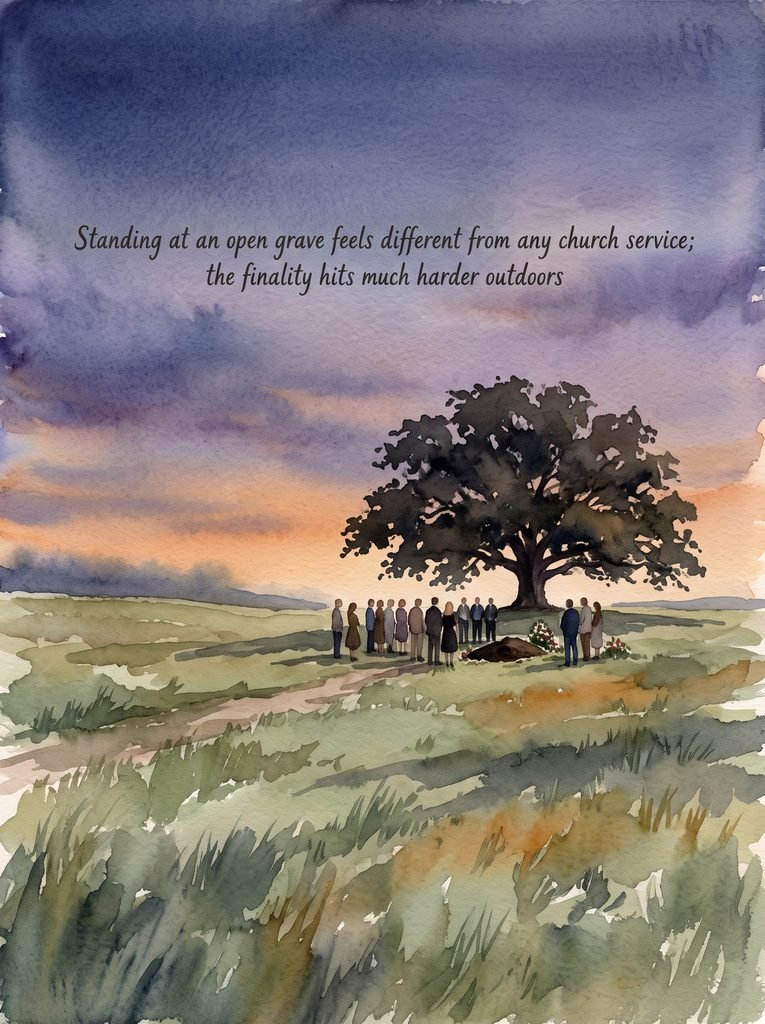
- Standing at an open grave feels different from any church service; the finality hits much harder outdoors.
- These prayers frame the grave as a waiting place, because Christ himself rested in a borrowed tomb.
- Asking an angel to guard the plot comforts families who hate leaving someone behind in the cold.
- Before the casket lowers, read John 14:2-3; Jesus promising to prepare a place fits the moment perfectly.
- I visit my grandparents’ graves each first week of November, praying quietly while tidying their weathered headstones.
- Catholics can gain a plenary indulgence for the dead by visiting cemeteries during those early November days.
- Muslim visitors offer supplications for the buried, asking Allah for well-being on both sides of the grave.
- Spontaneous words are perfectly acceptable; telling them about family news can itself become an honest, loving prayer.
- Bring a small bottle of blessed water, recite Rom 14:8, and remember we belong to the Lord.
- The Resurrection hope makes graveside prayer defiant; we bury bodies expecting them to rise again, transformed, someday.
- I’ve seen widows bring folding chairs and read Psalm 121 aloud every Sunday for many years afterward.
- Tracing the cross on a headstone mirrors the gesture made over the mortal body before its burial.
- Pray for the brothers and sisters buried nearby too; cemeteries are communities, not just rows of stones.
- Reading 1 Thessalonians 4:13-18 at the graveside gently reminds mourners not to grieve like those without hope.
- Leave flowers, then invite intercessors too; asking a saint to watch over the grave costs absolutely nothing.
Bible Verses / Scripture Readings For The Dead

- When a friend died suddenly, Scripture said what I couldn’t, and I’ve leaned on these verses since.
- Psalm 23 remains the most requested reading at funerals, and its shepherd imagery fits the true Shepherd.
- John 11:25 declares Jesus the resurrection and the life, a line I’ve heard steady many trembling voices.
- Revelation 21 promises God will wipe tears away, where death and pain are simply no more forever.
- Reading at the bedside? Keep it short; a dying person absorbs a single verse better than chapters.
- Job’s cry that his Redeemer lives was written in agony, which makes it honest for grieving families.
- Psalm 91 offers protection language that comforts those keeping vigil through long, frightening nights in hospital wards.
- Romans 8:38 insists nothing separates us from God’s love, not even the time of death or burial.
- Matthew’s parable of the ten virgins reminds mourners to stay ready, because nobody knows their own hour.
- Luke’s account of Christ praying in Gethsemane shows that even God’s Son felt deep dread before dying.
- I suggest families take turns reading aloud; hearing different voices makes the passages feel like shared praise.
- Isaiah 25 describes God destroying death itself, which reframes funerals as temporary rather than permanent, final defeats.
- 1 Corinthians 15 asks where death’s sting has gone, a defiant question I love reading at gravesides.
- Wisdom 3 calls the souls of the just safe in God’s hand, untouched by any torments whatsoever.
- Psalm 130’s cry from the depths captures pleading prayer; it’s traditionally prayed for the departed in November.
Why And How To Pray For The Dead
- People ask me whether prayers change anything after death; I believe they change both soul and pray-er.
- The Catechism of the Catholic Church describes purification after death, which reshapes how grieving families should pray.
- CCC 1030 reassures us those being purified are already saved, so our prayers aren’t desperate last-minute pleas.
- 2 Cor 5:8 speaks of being home with the Lord, which shapes the hope behind every petition.
- There’s no formula; spontaneous prayer spoken honestly at the kitchen table counts as much as formal liturgy.
- The Sacraments remain central; Catholics consider offering the Mass the strongest help anyone can give the dead.
- Praying for the dead also confronts your own mortal life, which is uncomfortable but clarifying over time.
- The pope traditionally visits a cemetery on All Souls’ Day, modeling the practice publicly for Catholics everywhere.
- Start small: one name, one minute, one sign of faith each night before turning off the lights.
- Keep a list of the departed; I add a name whenever someone close has died in Christ.
- Prayer for the dead also heals us; negative influences of unresolved conflict loosen when we pray consistently.
- Muslims pray duas for the deceased too, showing this instinct crosses traditions rather than belonging to one.
- St. Faustina wrote that our prayers can help save souls, a motivation I find quietly, deeply powerful.
- Don’t wait for perfect feelings; pray through failings, doubts, and faults, because the departed still benefit regardless.
- Make it rhythmic: weekly holiness habits like Friday prayers keep the dead woven into your ordinary life.
Gathering In The Presence Of The Body

- Before funeral homes existed, families prepared bodies themselves, and those hours were often the holiest of grieving.
- Gather around the body; nobody needs to speak until someone begins with the Sign of the Cross.
- Sprinkling water over the deceased recalls that their body was once a Temple of the Holy Spirit.
- Families who help wash or dress the bodily remains describe it as their final act of love.
- I remember helping my aunt comb my grandmother’s hair; it felt more like prayer than any service.
- Signing the forehead of the deceased mirrors baptism, closing the circle of a faithful Christian life gently.
- Praying the Our Father together unites relatives who may not have spoken peacefully in many, many years.
- Using the words In your hands while touching the deceased makes the surrender physical, not merely spoken.
- Remind everyone that God’s mercy is abundant, mentioning the fullness of peace and joy awaiting the departed.
- Children shouldn’t be excluded; gently explaining we came from the dust of the earth helps them understand.
- Close with a blessing asking God to wipe tears away; it often releases the first real crying.
- Light a candle beside the head; its light recalls the paschal flame and the sign of hope.
- Honest moment: some families feel awkward praying aloud, and that’s fine; even mumbled words reach Our Lord.
- Ask God that they live with you forever, addressing Him directly, the way families have always prayed.
- Before the funeral staff arrive, commend the soul to the Eternal Father and let everyone say goodbye.
Prayers For Mourners
- Mourners need prayer as much as the dead do, yet funerals often forget the people left standing.
- The brokenhearted rarely ask for help directly, so praying for them quietly is sometimes the kindest gesture.
- Psalm 34:18 promises God stays close to those crushed in spirit, and grieving widows cling to that.
- These prayers don’t demand cheerfulness; they ask for courage to survive one hour, then the next one.
- Pray against bitterness specifically, because unresolved anger toward God or doctors can poison grief for many years.
- Grief leaves people overburdened; pray that Christ’s promise of a burden light becomes real for them soon.
- Share John 16:33 with mourners; Jesus admitting trouble exists feels far more honest than cheerful, empty platitudes.
- Faith helps mourners overcome the world and its pressure to move on quickly before real healing begins.
- Ask for certainty in doubt, not perfect answers; mourners can live with questions if peace accompanies them.
- Pray that families treasure memories without regret, entrusting loved ones’ souls to God’s faithful care and confidently.
- Mourners often stop eating and sleeping; praying for their spiritual wounds should include their physical exhaustion too.
- Isaiah 41:10 pairs well here; God promising to strengthen and uphold speaks directly to quietly collapsing mourners.
- Praying with mourners matters more than praying for them; sit beside them and read aloud slowly together.
- Hope of reunion keeps mourners moving; mention being blessed in heaven together someday rather than forever separated.
- End by asking God to wipe every tear, gently, the way a parent comforts a weeping child.
Prayer For Those Mourning The Death Of A Child
- No funeral is harder than a child’s; I’ve watched seasoned priests struggle to find any fitting words.
- This prayer admits God’s ways exceed understanding, which feels more honest than explanations grieving parents rightly reject.
- Never tell parents God needed another angel; pray quietly for love of God to hold them instead.
- Miscarriage and stillbirth belong here too; pray for parents whose babies never drew a single earthly breath.
- Mothers often blame themselves; pray they are forgiven by their own hearts, since God holds no blame.
- Fathers grieve differently, often silently at work; include them by name so their sorrow isn’t quietly overlooked.
- Siblings carry this loss for decades; ask that they’re comforted and not forgotten amid overwhelming parental grief.
- Jesus welcomed children openly; parents can trust their little one is safely held in Heavenly company now.
- I once sat with a mother who prayed this daily for a year; it kept her breathing.
- Catholic tradition entrusts unbaptized infants to God’s great mercy, which comforts parents terrified about their baby’s soul.
- Pray the parents’ marriage survives; child loss strains couples enormously, and few people talk openly about that.
- Revelation 21:1-7 promises a world without tears, which grieving parents often request at those small white-casket funerals.
- Ask that the child’s brief life still bears fruit, through positive impact on everyone who loved them.
- Anniversaries and birthdays hit hardest, so pray this again on those dates, not only at the funeral.
- Hope remains: parents can trust they will meet again their child, whole and laughing, in God’s presence.
Prayer For Consolation

- Consolation prayers aren’t about fixing grief; they ask for company inside it, which honestly changes almost everything.
- Addressing Mary as Virgin Mother feels natural, because she stood at the cross watching her Son die.
- Our Lady of Sorrows remains the patroness I recommend most often to people praying through fresh loss.
- The dearest Mother framing softens prayer for those who struggle approaching God directly after a sudden death.
- I’ve prayed this through tears at three in the morning; it asks almost nothing of the exhausted.
- Asking for refreshment of spirit acknowledges that grief drains energy as much as any physical illness does.
- Consolation isn’t weakness; even Luke 22:39-46 shows an angel strengthening Jesus during his anguished agony in Gethsemane.
- Pray it alongside Psalm 91, imagining God’s wings covering you the way a bird shelters her chicks.
- Name what you need honestly: sleep, patience, appetite, or simply one day without crying in public places.
- Consolation often arrives through people, so pray for friends who will bring meals and walk with us.
- Praying the Holy Mary slowly, one bead at a time, steadies racing thoughts better than most remedies.
- Ask for loving compassion toward yourself; mourners often treat their own grief far more harshly than others’.
- Scripture offers rest for your souls, a promise grieving people often need repeated aloud several times daily.
- Don’t rush consolation; sometimes it takes months before prayer feels like peace of the Lord Jesus Christ.
- Thank God for small mercies along the way; thanksgivings amid sorrow deepen comfort rather than deny pain.
Priestly Blessing For The Deceased
- This blessing comes from Numbers 6, where God taught Aaron’s priests to bless Israel with these words.
- Applying it to the dead surprises some people, but it extends an ancient blessing beyond the grave.
- Praying it at gravesides works because it’s short enough for faithful people of every age to memorize.
- Asking God’s face to shine expresses the deepest desire: that the departed see Him without any fear.
- Its threefold structure echoes the Trinity, which early Christians noticed and treasured long before formal theology developed.
- Ending with peace feels right; it’s the one gift mourners most want for those they’ve lost recently.
- Jewish families also use this blessing, so it bridges traditions at interfaith funerals quite beautifully and respectfully.
- Parents whisper it over a little child laid to rest, tracing a cross on the small forehead.
- Praying it in Christ’s name connects the ancient Hebrew words to the resurrection hope Christians firmly hold.
- I’ve seen priests raise their hands over the coffin while saying it, and the gesture moves everyone.
- Laypeople can use it freely; it requires no ordination, only sincere words of faith spoken with love.
- The word “keep” implies protection continuing after death, which comforts families who fear their person is lost.
- Pair it with Ps 25:1, lifting your soul alongside theirs, so the blessing becomes mutual and shared.
- Graciousness here means undeserved favor, a reminder that heaven is pure gift, not earned through merits alone.
- Many families print it on memorial cards, because it fits small spaces and carries enormous tender love.
Byzantine Prayer For The Deceased
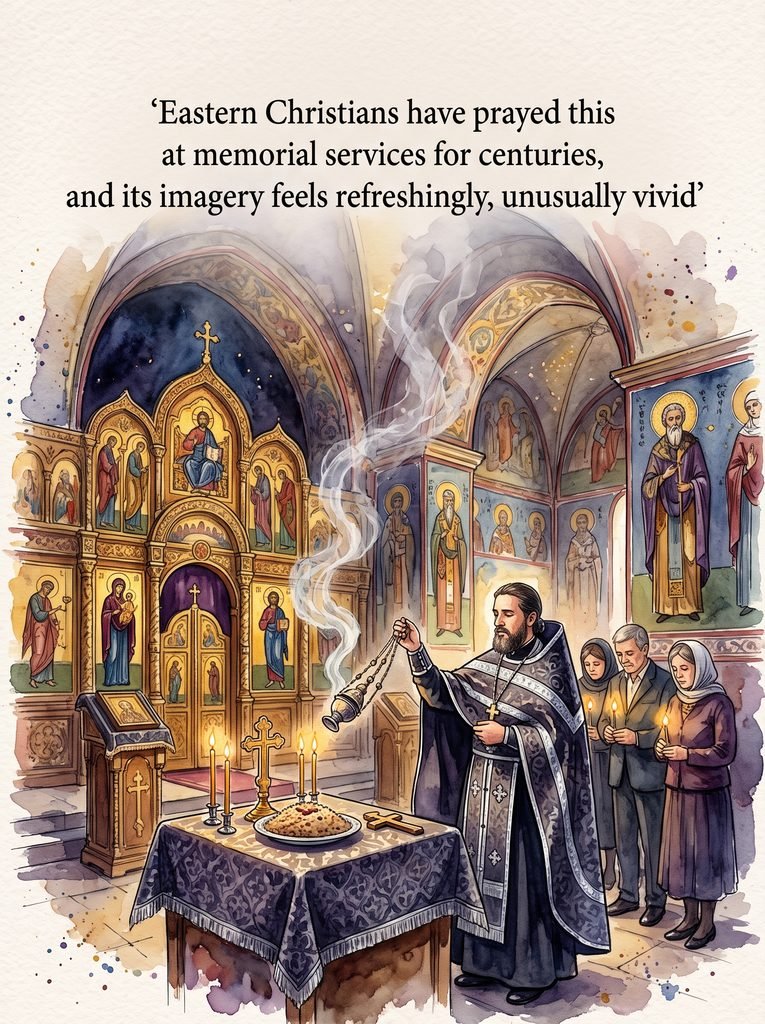
- Eastern Christians have prayed this at memorial services for centuries, and its imagery feels refreshingly, unusually vivid.
- It begins with Christ’s victory over sin and death, then asks rest for the newly departed afterward.
- Orthodox parishes sing it at the panikhida, a memorial service I first attended at a Greek church.
- Green, refreshing places in this prayer reflect desert monks’ longing, which explains why the imagery feels tangible.
- It admits plainly that nobody lives without sinning, easing families anxious about their loved one’s past offenses.
- Only God remains sinless, a humbling contrast that keeps the prayer honest rather than flattering the dead.
- Western Catholics can borrow it freely; I use it during November when Latin prayers start feeling routine.
- Its closing glorifies the Trinity, naming Christ as Holy Lord of the living and the departed alike.
- Byzantine theology emphasizes Paschal Mystery joy, so even funeral prayers carry a quiet undercurrent of Easter triumph.
- Forgiveness covers deeds, speech, and inner intentions alike, a thoroughness I find freeing when grieving complicated people.
- Mourners hold lit candles while it’s chanted, a visible reminder that the dead now dwell in light.
- Repeating the person’s baptismal name throughout keeps the prayer intimate, not generic, even in large, crowded churches.
- It treats God’s justice and mercy as compatible, challenging the modern assumption that judgment must feel cold.
- Absence of suffering and sighing defines this heaven, which resonates with families who watched long, painful illnesses.
- It’s prayed on the third, ninth, and fortieth days after death, marking the soul’s heavenly home journey.
John Henry Newman’s Prayer For The Departed

- Newman, now a canonized saint, wrote this with the same care he brought to his theological works.
- It’s long, so I recommend praying it slowly over several evenings rather than rushing through it once.
- Newman reminds God that the departed are His creatures, a bold appeal I find strangely, deeply reassuring.
- Catholics believe the faithful being purified belong with the Church Militant and Church Triumphant in one communion.
- It pleads that God overlook youthful sins and ignorance, which comforts parents of those who died young.
- Each apostle receives a role, forming a company of the Saints that welcomes the soul home joyfully.
- Archangel Michael escorting souls is tradition, and invoking him reassures those who fear the moment of judgment.
- Peter receiving them evokes the Gates of Paradise, an image every Catholic child grows up vividly picturing.
- The prayer assumes the departed sought reconciliation before dying, reflecting Newman’s view of confession’s moment of grace.
- I pray this for converts especially, since Newman himself converted at great personal cost in Victorian England.
- Its vision of angels carrying souls to Jerusalem above borrows from the old funeral chant In Paradisum.
- Martyrs are asked to befriend the departed, which feels oddly personal, like asking strangers to welcome family.
- It closes with eternal rest language, joining the Church’s tradition that unites every Catholic funeral prayer worldwide.
- Its Victorian phrasing feels formal, but praying it aloud reveals surprising warmth beneath the ardent desires expressed.
- Ask God to grant them life to come beyond the place of purification, as Newman envisioned it.
Prayer For The Departed (“Immortal God”)
- This prayer opens by naming God as both creator and protector, which steadies mourners feeling completely unprotected.
- Calling Him Living and True God reminds us we’re praying to someone present, not a distant memory.
- I often pray it at funeral receptions, quietly, once the coffee runs out and conversation finally thins.
- It asks God to overlook failings, acknowledging every person dies with some unfinished fault or quiet regret.
- The prayer leans on Christ’s suffering, insisting His cross was meant to rescue souls from final ruin.
- Its mention of a second, eternal death sounds severe, yet it clarifies what Christ came to prevent.
- Asking Mary and the holy Angels to assist the dead reflects deep confidence in heaven’s active help.
- Families gathered for a rosary often add this afterward, especially when the deceased loved Marian devotions deeply.
- It celebrates Christ as Lord and Savior who conquered both sin and death on our behalf forever.
- I recommend it for someone whose faith wavered late in life; it trusts Christ our God completely.
- Praying it in a parish, rather than alone, reminds mourners they belong to a larger Heavenly family.
- It quietly shows that the dead don’t earn heaven alone; Christ’s sacrifice carries them, world without end.
- Those carrying ignorance about faith matters needn’t worry; this prayer simply offers loved ones into God’s keeping.
- Ending in Christ’s name places every petition under His authority, the way Catholic liturgical prayers always conclude.
- Pray it on the funeral morning, before the Mass begins, when both thought and emotion run highest.
Prayer For The Deceased (“O Gentlest Heart Of Jesus”)

- This devotion grew from the Sacred Heart movement, which flourished in nineteenth-century France and spread rapidly worldwide.
- Its imagery of flames sounds intense, but it reflects purification by love rather than any cruel punishment.
- Many parishes keep this prayer beside the tabernacle, linking the dead to Christ’s real presence there constantly.
- Asking Jesus not to judge severely feels honest; most of us fear that for those we love.
- I pray this after Eucharistic adoration, naming my grandfather, whose soul I still picture in peaceful repose.
- The request for drops of Christ’s blood captures a beautiful idea: even small mercies cleanse waiting souls.
- Sending angels to guide the soul toward a place of light mirrors Eastern and Western funeral traditions.
- Refreshment, light, and peace form an old Roman liturgical phrase, found in the Mass’s memorial prayers today.
- It speaks to Jesus directly and tenderly, which suits people who find formal liturgy distant during grief.
- Calling Him Lover of souls fits naturally here, since this devotion centres on Christ’s burning, personal affection.
- Sacred Heart devotees often pray it on First Fridays, adding names of recently departed family members too.
- Its focus on the holy souls awaiting heaven keeps prayer hopeful rather than fearful about final outcomes.
- I’ve noticed many elderly parishioners know this by heart, often reciting it softly during weekday Requiem Masses.
- Pray it slowly, emphasizing gentleness; Christ’s mercy isn’t grudging, and the prayer’s tone should reflect that truth.
- Picture the soul led gently to a place of freshness, where every lingering stain finally washes away.
Prayer For Mercy On The Souls In Purgatory

- Purgatory confuses many Protestants I’ve spoken with, yet this prayer explains it better than most theology books.
- It begins by praising God’s generosity, setting a hopeful tone before mentioning anyone’s offenses or past negligence.
- Souls in purgatory are already saved, yet they long intensely for the heavenly glory awaiting them there.
- Older prayers called purgatory a place of punishment, but modern catechesis stresses loving purification and healing instead.
- This prayer captures temporary purification well, describing souls who simply await their final, joyful welcome home.
- I pray it during November especially, walking the parish cemetery with a list of names in hand.
- Its closing quotes Christ’s welcome from Matthew 25, which turns the prayer toward joyful anticipation, not dread.
- Asking God to fulfill their longings recognizes that purgatory involves desire, not merely suffering or waiting passively.
- Remember that contrition in life matters; this prayer gently completes what honest repentance began before death arrived.
- Some worry purgatory implies God’s stinginess; this prayer contradicts that, praising Him as good and compassionate God.
- Pair it with the prayer of St. Gertrude the Great for a complete evening devotion lasting minutes.
- Offering the most precious blood alongside it strengthens the petition, according to centuries of Catholic devotional practice.
- I tell newcomers that praying for purgatory isn’t morbid; it’s hopeful work for souls already eternally safe.
- Mention specific names, then broaden to all, including those whose fallen nature left wounds others never saw.
- Its promise of a kingdom prepared since creation reminds us God planned their homecoming before their deliverance.
Resurrection Prayer
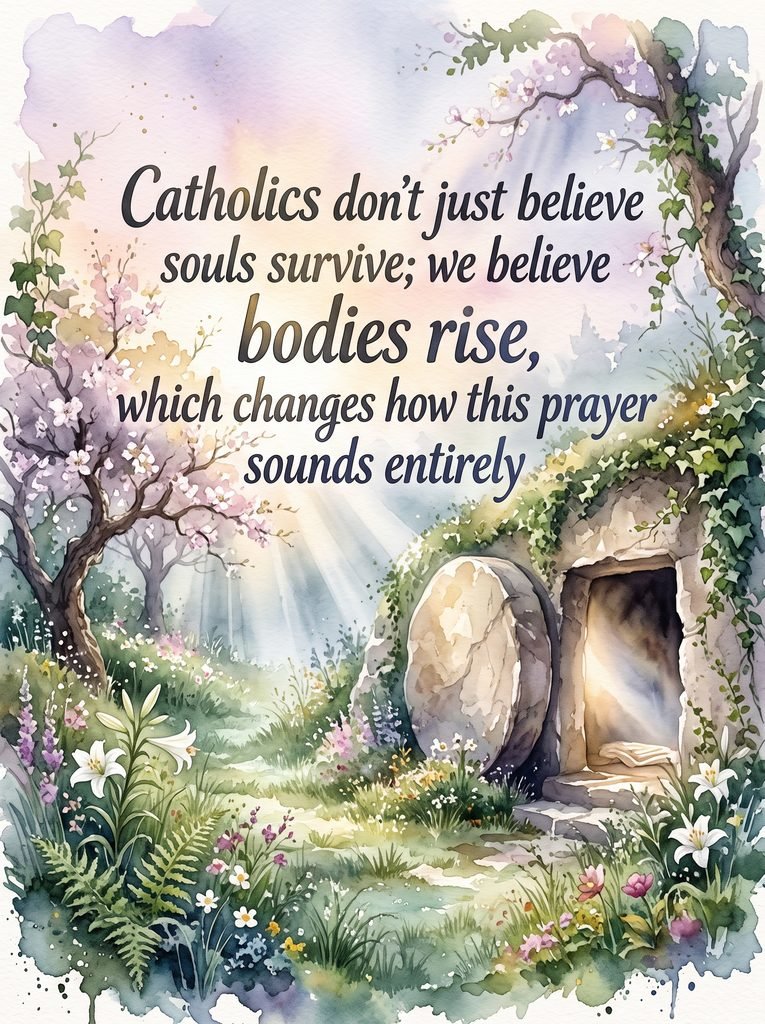
- Catholics don’t just believe souls survive; we believe bodies rise, which changes how this prayer sounds entirely.
- It commends the departed with confidence, expecting them to rise on the Last Day alongside every believer.
- The immortality of the soul matters, but resurrection goes further, promising restored, glorified bodies one glorious day.
- I read this at my uncle’s burial, and his widow later said it felt like a promise.
- 1 Thes 4:17 pairs naturally with it, describing believers caught up together to meet the Lord forever.
- Thanking God for the person’s earthly gifts keeps the prayer grounded, not abstract or overly theological too.
- Asking for paradise’s gates to open echoes the ancient image of Christ breaking open death’s prison doors.
- Luke 24:1-8 describes the empty tomb at dawn, and I often read it right before this prayer.
- Resurrection hope serves the living as much as the dead, which this prayer quietly and beautifully acknowledges.
- John 6:37-40 records Jesus promising to raise every believer up, the scriptural backbone of this entire prayer.
- Easter Vigil candles make a fitting backdrop; light rising from darkness mirrors bodies someday rising from graves.
- Praying it, I picture Christ who trampled death, and that confident image strengthens wavering families quite visibly.
- Some find bodily resurrection hard to believe; this prayer doesn’t argue, it simply states the Church’s hope.
- Being united again with loved ones in glory gives this prayer its real emotional weight at gravesides.
- Pray it during the Easter season at the cemetery; resurrection prayers feel especially vivid and alive then.
“In Our Hearts” Memorial Verse
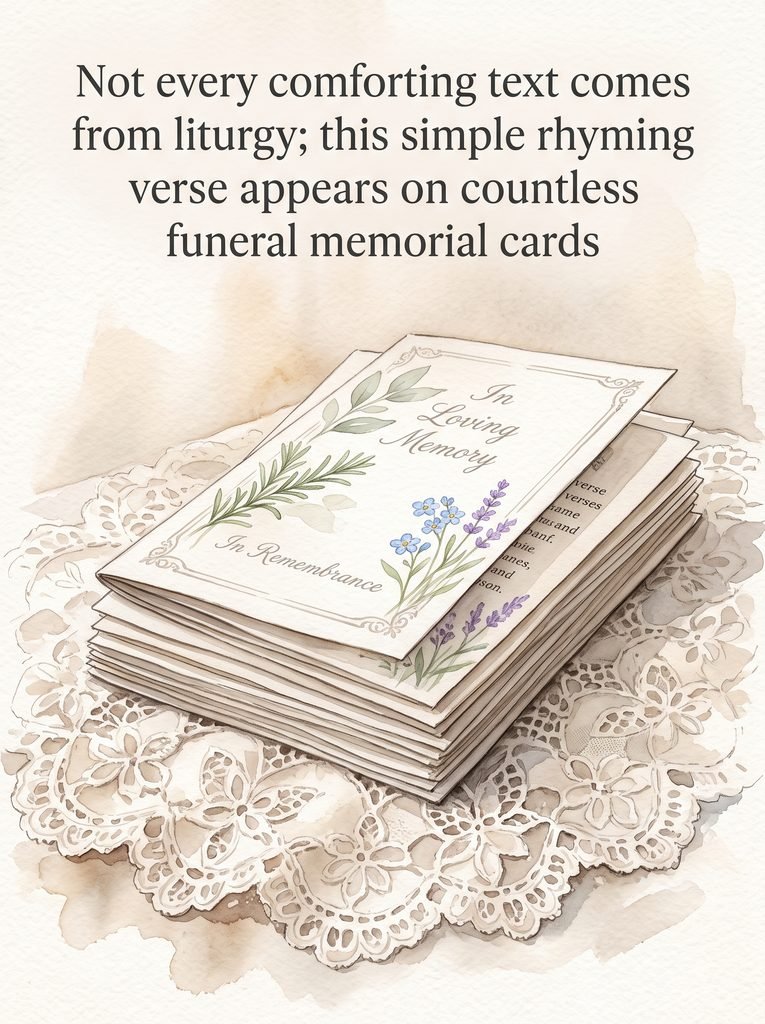
- Not every comforting text comes from liturgy; this simple rhyming verse appears on countless funeral memorial cards.
- Its strength is plainness; children can recite it at a grandparent’s funeral without stumbling over complicated theology.
- It speaks to the departed directly, the way grieving people naturally tend to talk at gravesides anyway.
- I’ve watched teenagers write it inside sympathy cards when formal prayers felt far too stiff to share.
- The promise of reunion carries the verse, echoing Rom 8:35 that nothing separates us from Christ’s love.
- Thanking the deceased for everything they did honours ordinary sacrifices, the kind formal theology sometimes quietly overlooks.
- Its talk of heavenly reward recalls the keys of the kingdom of heaven entrusted to Saint Peter.
- Catholic purists sometimes dismiss sentimental verses, but grief rarely cares about literary standards or doctrinal precision honestly.
- Pair it with Ps 31:6a, commending the spirit to God, so the verse keeps a prayerful anchor.
- Many families engrave its opening lines on headstones, where strangers pause and read them for many years.
- Families often tuck it inside the family Bible, beside birth and death dates recorded across several generations.
- It acknowledges grief lasting a lifetime, which honestly matches what bereaved people report years after a loss.
- Combine it with formal prayer, so mourners hold both personal memory and the Church’s hope of eternity.
- Its gentle rhythm works well read by a grandchild, whose young voice often moves the whole room.
- Keeping someone in your heart isn’t denial; it’s how love quietly continues after the funeral flowers fade.
Prayer For Healing Of Family And Ancestors

- Some families notice patterns repeating across generations, addiction, anger, estrangement, and this prayer addresses them quite directly.
- I approach it carefully; healing comes through Christ’s mercy, never through blaming the dead for absolutely everything.
- It asks God to forgive relatives’ iniquities, releasing both them and us from old, long-inherited, bitter resentments.
- Forgiving the dead often frees the living more than anything else; I’ve seen marriages noticeably improve afterward.
- Pray for sins of their youth too, the mistakes grandparents never confessed but quietly carried for decades.
- Catholic exorcists caution against obsessing over generational curses; trust in Christ remains the safest, simplest approach.
- Pray before the blessed sacrament for deceased relatives, naming each one and asking Christ’s healing, merciful presence.
- This prayer also asks for peace among living relatives, which matters when inheritance disputes follow a death.
- Calling on God as Father and Protector reassures families that broken lineages can still be fully restored.
- I recommend praying it after drawing a simple family tree, so names become faces rather than abstractions.
- It ends in gratitude for God’s patience, a reminder that generational healing takes time, not quick fixes.
- Converts often pray it for ancestors who served strange gods, entrusting them to Christ’s unlimited, gracious mercy.
- Ask that loving mercy cover family members who died estranged, without reconciling or ever saying goodbye properly.
- The holy temple of family life gets rebuilt slowly, one prayer and one forgiveness at a time.
- Pray it with your children present, so the next generation inherits faith instead of old family wounds.
Islamic Duas For The Deceased

- The first words Muslims say after a death come from Quran 2:156: we truly belong to Allah.
- That verse, إِنَّا لِلَّهِ وَإِنَّآ إِلَيْهِ رَٰجِعُونَ, frames loss as returning, not ending, which deeply reshapes grief.
- Islam teaches patience, not wailing; the Prophet urged families to speak only good words near the dying.
- When Abu Salama died, the Prophet prayed Allāhumma-ghfir lah, asking forgiveness before anything else was even said.
- It asks Allah to raise his rank, expand his grave, kindly look after those he leaves behind.
- Reported in Sahih Muslim 920a, it ends asking Allah to illuminate the grave, turning darkness into light.
- Islamic condolence borrows the Prophet’s words: Allah took, Allah gave, and everything has its appointed time.
- Narrated by Usama bin Zaid, it closes urging mourners to be patient and quietly seek Allah’s reward.
- During Janazah prayer, Muslims stand in rows without bowing, asking Allah to pardon and protect the deceased.
- Picture sins washed with water, snow and ice, until the soul resembles a spotless white garment again.
- It asks for a better home, better family, and better spouse, which surprises mourners hearing it translated.
- Narrated by ‘Auf b. Malik, the dua requests an honourable reception, then asks to widen his entrance.
- It seeks refuge from the punishment of the grave and Hell-Fire, reflecting Islam’s sober view of accountability.
- Visiting graves, Muslims greet the dwellers with As-salāmu ʿalaykum, adding Allah willing, we will join you soon.
- Many families also give ongoing charity, or continuous charity, building wells so rewards keep reaching the deceased.
First Thing To Say After Someone’s Death
Before tears, phone calls, or arrangements, a Muslim whispers Inna lillahi wa inna ilayhi raji’un. I’ve heard it in hospital corridors, said immediately after death, by people barely standing. It hands the loss back to the Lord of the worlds.
Dua After Someone’s Death

- This dua comes straight from the Prophet’s lips, spoken beside his companion Abu Salama’s body in Medina.
- He closed the man’s eyes first, then explained that sight follows the soul as it finally departs.
- When relatives began wailing, he told them to say only good, because angels say Amen to it.
- That warning shaped Muslim mourning ever since; households try to keep speech gentle and prayerful during grief.
- I learned this dua from my grandmother, who recited it over every neighbour’s loss in our street.
- It begins with forgiveness, because Muslims believe pardon is the greatest possible gift for the departed soul.
- Asking Allah to elevate the deceased among the rightly guided connects them to the community of believers.
- The request to look after descendants shows Islam cares about the living family, not just the departed.
- Notice it includes “forgive us and him”; the person praying never stands outside the need for mercy.
- Spacious graves and light within them reflect Islamic teaching that the grave is a real, conscious stage.
- For a woman, Arabic pronouns change from lahu to laha, a detail many families forget under pressure.
- You can recite it in Arabic or your own language; sincerity matters more than perfect pronunciation here.
- Families often repeat it during the three days of mourning, when visitors fill the home with prayer.
- I keep it saved on my phone, because grief makes even familiar words disappear from memory instantly.
- Its focus on the deceased’s well-being in the grave gives grieving families something concrete to ask for.
Condolence To Say To The Bereaved

- Visiting a grieving Muslim household, I used to freeze, unsure what words would comfort rather than offend.
- This prophetic condolence solved that, giving visitors a short, meaningful phrase rooted directly in the authentic Sunnah.
- The Prophet sent it to his daughter when her child was dying, rather than going immediately himself.
- Its central idea is ownership: everything we love was always Allah’s, lent to us for a while.
- Every life has a fixed length of time, and this condolence gently reminds mourners of that certainty.
- It ends by encouraging patience and hoping for reward, which reframes grief as worship rather than defeat.
- Saying it doesn’t require eloquence; even a mumbled version, offered sincerely, lands better than long, rambling speeches.
- Avoid saying “I know how you feel”; this phrase focuses on Allah’s wisdom instead of personal comparisons.
- Pakistani families often pair it with “Allah maghfirat kare,” blending Arabic tradition with Urdu warmth quite naturally.
- Condolences in Islam traditionally last three days, though close relatives may visit longer if the family needs.
- A widow observing iddah receives condolences longer, and visitors should respect her quieter, extended mourning period carefully.
- Bring food rather than flowers; Prophetic Sunnah encourages neighbours to feed the grieving family for several days.
- I’ve noticed bereaved fathers rarely receive comfort directly, so I make a point of addressing them first.
- This condolence accepts that Allah’s decisions often follow ways beyond understanding, without demanding explanations from grieving hearts.
- Text messages work too, but nothing replaces sitting quietly beside the family and repeating it in person.
Dua During The Janazah Prayer
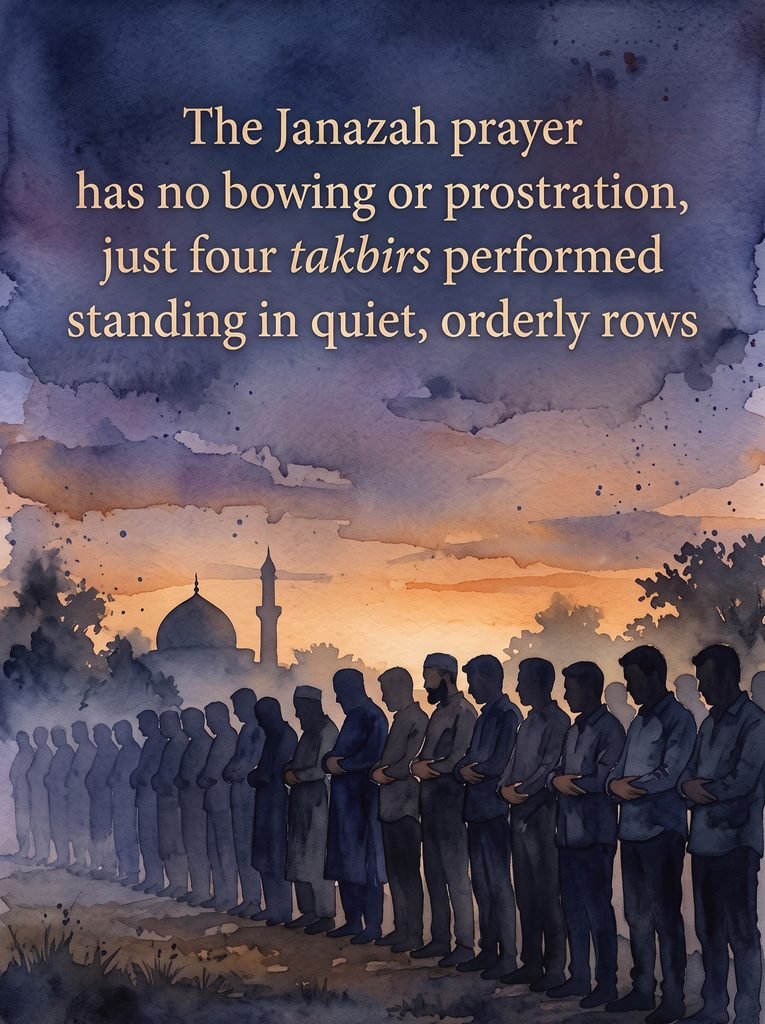
- The Janazah prayer has no bowing or prostration, just four takbirs performed standing in quiet, orderly rows.
- This dua is recited after the third takbir, when the congregation turns attention entirely toward the deceased.
- In many schools, Surah Al-Fatiha and blessings on the Prophet come first, building toward this personal petition.
- Its requests pile up beautifully: forgiveness, mercy, safety, pardon, and a generous welcome into the eternal hereafter.
- I memorized it after attending my uncle’s Janazah, embarrassed that I could only follow along in silence.
- The washing imagery asks Allah to purify the soul completely, the way clean water restores stained cloth.
- Exchanging the earthly house for a better one acknowledges how temporary our earthly dwelling truly always was.
- The spouse request sometimes confuses widows, but scholars explain it simply means perfected, eternal companionship in Paradise.
- Larger congregations matter; a hadith mentions intercession accepted when forty or more believers pray over someone sincerely.
- Women may attend Janazah prayers in many communities, though customs vary widely between regions and legal schools.
- Unlike other prayers, it’s fard kifayah, meaning the community fulfills it collectively rather than every single individual.
- When I lead small funerals, I recite it slowly so newer Muslims can repeat the words quietly.
- Protection from the grave’s trials and the Fire reflects Islam’s balance between hope and honest, sober fear.
- For children, a different dua is used, asking Allah to make the child a forerunner for parents.
- The prayer ends with salam, and the body is carried to burial while believing hearts keep praying.
Giving Charity On Behalf Of The Deceased
Islam treats charity for the dead as a gift that keeps arriving. Surah An-Nahl, verse 96, reminds us that what we hold fades, while what Allah keeps lasts. I’ve watched grieving families redirect funeral budgets into wells, turning one death into years of clean water.
The Prophet taught that three things continue benefiting a person after death: ongoing charity, beneficial knowledge, and a righteous child who prays. Building a mosque, sponsoring an orphan, or planting trees in someone’s name can purify grief into purpose, keeping their reward flowing quietly.